Idaho’s 2026 Mid-term Ballot Measures Explained

Idaho’s 2026 Mid-term Ballot Measures Explained

by Aaron McFarland

Follow This Is Boise

Published October 20th, 2026 by Aaron McFarland

If you’ve ever read a ballot measure and come away more confused than when you started, that’s not an accident. Ballot questions are often written in dense legal language on purpose, and the wording doesn’t always make it clear what a yes or no vote actually does.

This year, the Idaho Supreme Court even ruled that the official yes and no statements written for Proposition 1 didn’t clearly explain what each vote would do, and new wording had to be approved just weeks before ballots went out.

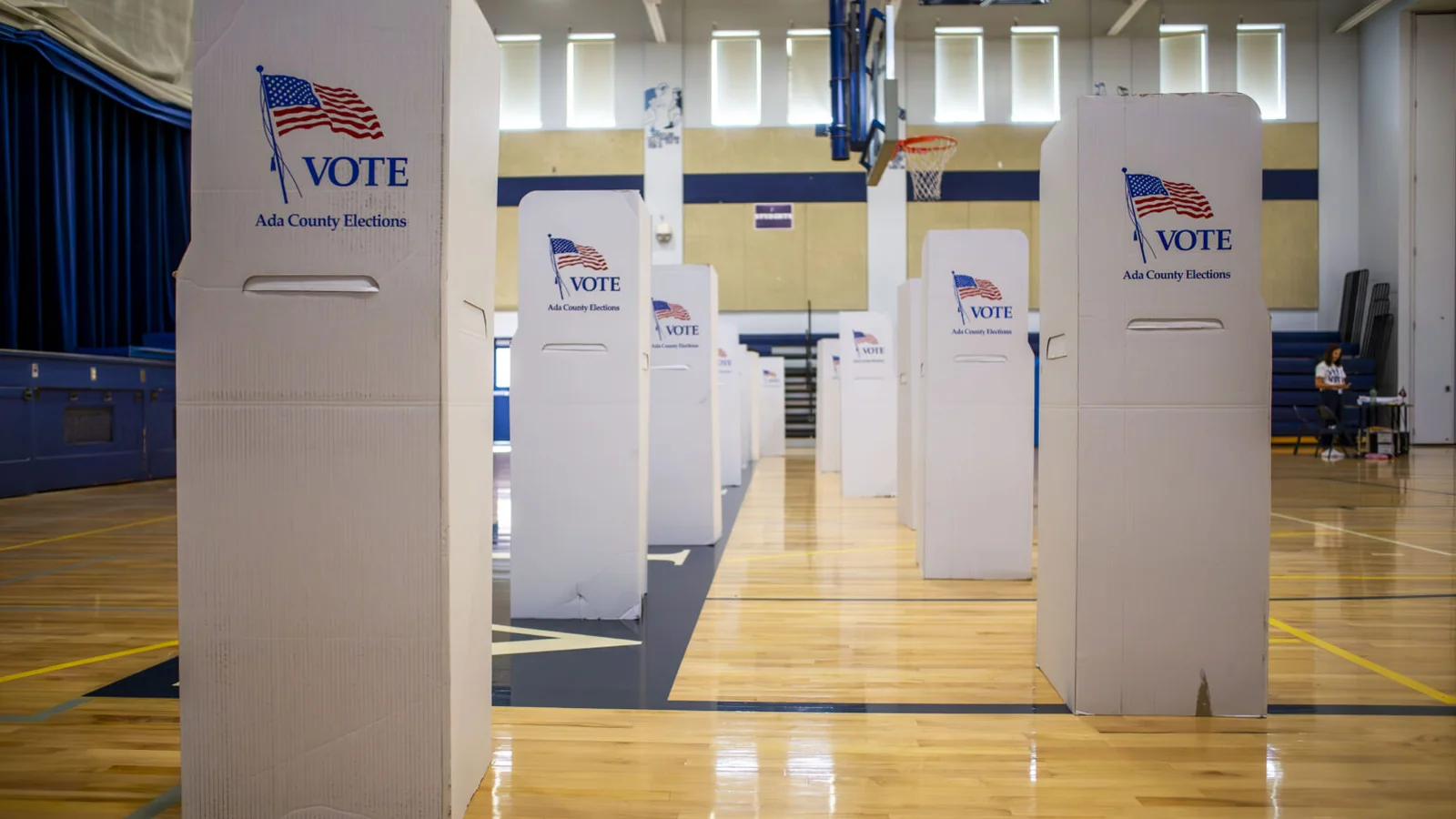
There are four statewide measures on Idaho’s November 3rd, 2026 ballot. You’ll find them all below in the order you’ll see them on your ballot, plus the local measures Treasure Valley voters will find further down.|

Save this for reference for early voting or election day.

Sign up for the newsletter!

Stay updated with Boise area news and events in our newsletter, launching soon! Just enter your email below.

HJR 4: Who Gets to Legalize Marijuana and Other Drugs

What the Ballot Says

“Shall Section 26, Article III of the Constitution of the State of Idaho be amended to provide that only the Idaho Legislature shall have power and authority to legalize the growing, producing, manufacturing, transporting, selling, delivering, dispensing, administering, prescribing, distributing, possessing, or using of marijuana, narcotics, or other psychoactive substances?”

What It Means

Only Idaho lawmakers could legalize marijuana or other drugs. Voters would lose the ability to do it themselves through a ballot initiative.

A YES vote gives that power to the Legislature alone.

A NO vote changes nothing. Marijuana stays illegal, and citizens can still propose legalization through an initiative. A no vote does not legalize anything.

What You Should Know

This one is not about whether marijuana should be legal. It’s about who decides. In short, if it passes, it would take away the public’s right to vote on any future marijuana legalization measure.

Idaho’s Constitution lets citizens write and pass their own laws through the initiative process if they collect enough signatures (6% of registered voters in at least 18 of the state’s 35 legislative districts). Medical marijuana supporters have been trying to use that process for more than a decade, and this year’s attempt again fell short on signatures.

HJR 4 would close that path for marijuana and other psychoactive substances, while leaving the initiative process in place for every other topic. The Legislature voted to put it on the ballot in 2025, 58-10 in the House and 29-6 in the Senate.

Supporters argue that legalizing drugs is too big a decision to make through a signature campaign, and that it belongs in the Legislature, where bills get public hearings, and lawmakers answer to voters.

Opponents argue that it takes away a power the Idaho Constitution reserves for the people, and that it isn’t needed, since the Legislature can already change or repeal a law passed by initiative.

Students working at their desks in an Idaho elementary school classroom

HJR 6: Putting English as the Official Language in the Constitution

What the Ballot Says

The ballot asks whether to add a new Section 8 to Article X of the Idaho Constitution making English the official state language, and requiring English for public proceedings, documents, instruction and other public acts, except where federal law requires otherwise.

What It Means

English would become the official language in the Idaho Constitution, not just in state law.

A YES vote adds it to the Constitution. Government meetings, government documents and public school instruction would be in English, with other languages still allowed where federal law requires them.

A NO vote leaves the Constitution as it is. English stays Idaho’s official language under existing state law. A no vote does not remove English as the official language.

What You Should Know

English is already Idaho’s official language. A state law passed in 2007 says so, with exceptions for things like public safety, public schools, and libraries.

So the real question is whether to lock it into the Constitution. A regular law can be changed by the Legislature in a single session. Changing the Constitution takes a two-thirds vote in both chambers plus approval from voters.

The Legislature voted to put it on the ballot in 2025, 59-8 in the House and 30-5 in the Senate.

Supporters argue that a shared official language promotes unity, encourages non-English speakers to learn English, and could cut spending on translated materials. They point out that services federal law requires in other languages would stay in place.

Opponents argue that it’s redundant, since the current law already does this and is more detailed. They say the amendment could get in the way of public schools teaching foreign languages, and that it sends a message to non-English speakers that they aren’t welcome.

Proposition 1: The Reproductive Freedom and Privacy Act
What the Ballot Says

The short title reads “Measure creating right to abortion before fetus viability, and post-viability to protect health; right to privacy; healthcare provider liability protections.”

The question itself simply asks, “Shall the above-entitled measure proposed by Proposition One be approved?”

What It Means

Abortion would become legal in Idaho up to fetal viability, and after that when the pregnant woman’s life or health is at risk.

A YES vote makes the Reproductive Freedom and Privacy Act state law starting January 1st, 2027. Because it’s a regular law and not a constitutional amendment, the Legislature could later change or repeal it.

A NO vote keeps Idaho’s current abortion law in place.

What You Should Know

This is the abortion measure. It’s a citizen initiative that was put on the ballot by collecting signatures, and it would change the current restrictive abortion state law, not the Constitution.

Under current Idaho law, performing an abortion is a felony at every stage of pregnancy. The only exceptions are to prevent the death of the pregnant woman, and in the first trimester for rape or incest reported to law enforcement or child protective services.

The advertising narrative has been misleading:

There has been a lot of misleading information about Prop 1 in ads and on social media. Political content from opponents has claimed it would allow abortion “up to birth” or “on demand”. However, the text only allows for it in specific circumstances, up to “fetal viability” or in the case of life-threatening injury to the mother.

Ads have also claimed non-doctors could perform abortions, but the measure only protects licensed health care providers from penalties, and licensing laws would still decide who can perform the procedure. Former Idaho Supreme Court Chief Justice Jim Jones called that claim “baloney.”

The one real gray area is parental consent. Prop 1 doesn’t mention minors, and supporters say Idaho’s parental consent law stays in place, but ads against it and the Attorney General’s office argue language saying the act controls “over any other section of Idaho Code” could override it. Legal experts say courts may have to settle that question.

Prop 1 would:

  • Create a right to abortion up to fetal viability, the point where a fetus can survive outside the womb without extraordinary medical measures. The measure doesn’t set a specific week.
  • Allow abortion after viability in a “medical emergency,” which covers serious threats to the woman’s life or health. That’s broader than the current exception, which only covers preventing death.
  • Write into law a right to make reproductive decisions, including contraception, fertility treatment, and prenatal and postpartum care
  • Require any restrictions to be “narrowly tailored to improve or maintain the health” of the patient
  • Protect patients and health care providers from penalties for care covered by the act

Supporters, led by Idahoans United for Women and Families, argue that it restores health exceptions, including for fatal fetal diagnoses, protects doctors from prosecution for making medical decisions, protects access to contraception and IVF, and leaves parental consent laws unchanged.

Opponents, including the Idaho Family Policy Center, Right to Life Idaho and the Catholic Diocese of Boise, argue that it would allow abortions later in pregnancy, expand who can perform them beyond physicians, and could let minors get abortions without parental involvement.

The two sides directly disagree on what the measure does to parental consent.

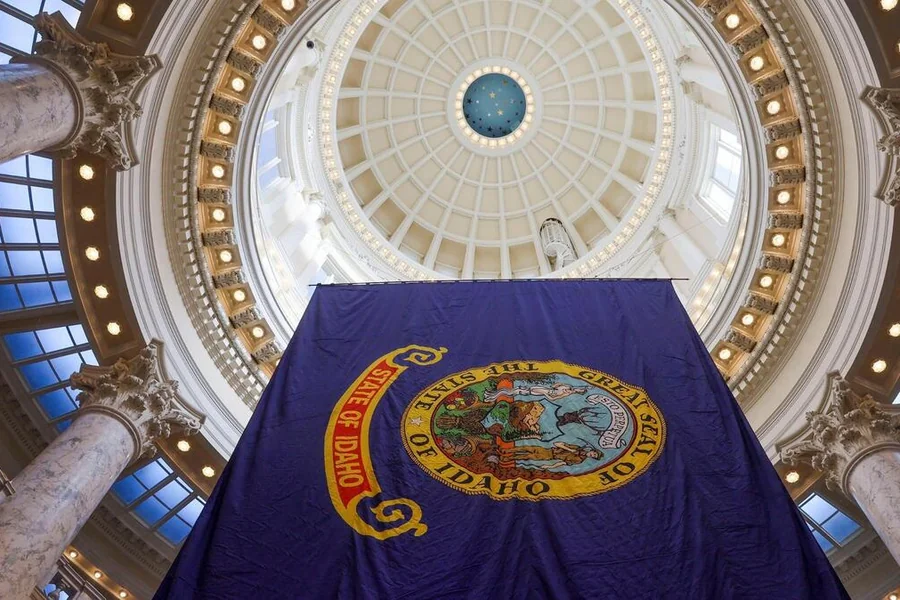
The Idaho state flag hanging in the Idaho State Capitol rotunda

Advisory Question: Picking an Official State Gun
What the Ballot Says

“Which of the following guns should be designated as the state gun of Idaho? Please choose only one answer.”

  • Winchester Model 1894 (.30-30)
  • Winchester Model 1873, “The Gun that Won the West” (.44-40)
  • 1873 Colt Single Action Army Revolver, “Peacemaker” (.45 Colt)
  • M1 Garand rifle (.30-06)
  • Colt M1911 .45 automatic pistol (.45 ACP)
  • Remington Model 700 bolt-action rifle (.30-06)

What It Means

This one works differently. There’s no yes or no. You pick one of the six firearms.

The result is non-binding, so nothing becomes official on Election Day. The Legislature would have to pass a law in a future session to name a state gun. Like anything on the ballot, you can also leave it blank.

What You Should Know

This is a poll of voters, not a law. If it’s something that interests you, vote on it, or don’t.

House Bill 932, sponsored by Rep. Jason Monks, put the question on the ballot, and he tied the idea to America’s 250th anniversary. It passed both chambers of the Legislature without a single no vote.

About ten states already have an official state gun. There are no organized campaigns for or against this one, and the state voter pamphlet doesn’t include arguments on either side, just a short description of each firearm.

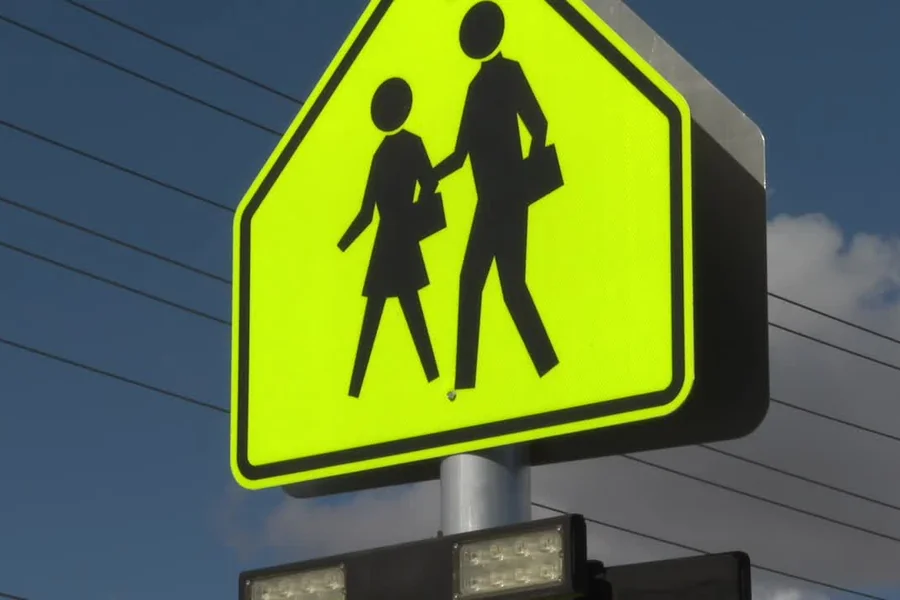
School crossing sign with flashing lights in Ada County

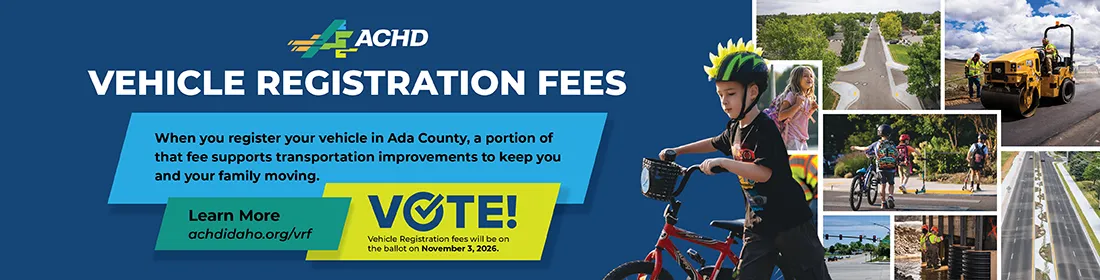
Local Measure: ACHD Vehicle Registration Fee

This one is on every Ada County ballot.

What the Ballot Says

The ballot asks Ada County voters whether the Ada County Highway District can continue charging its vehicle registration fee on passenger vehicles weighing 8,000 pounds or less through 2046.

What It Means

It’s a renewal of a fee you already pay, not a rate increase.

A YES vote keeps the fee at current rates through 2046.

A NO vote means the fee expires in 2028. It needs a simple majority to pass.

What You Should Know

This is about local funding for traffic and safety improvements. ACHD has a small fee charged on top of your state registration that focuses on improving safe school access for kids, reducing traffic congestion, and calming.

Voters first approved it in 1990 and renewed it in 2008. It brings in about $14 million a year, and state law requires that money to go toward building, repairing, and maintaining roads in the district. ACHD says it funds road and bridge maintenance, congestion relief, sidewalks and safe routes to school.

Supporters, including the ACHD Commission, argue that it keeps a funding source residents already pay without raising rates.

Critics argue that the fee isn’t applied fairly, since heavier commercial trucks that cause more road wear don’t pay it. ACHD says vehicles over 8,000 pounds fall under a separate state fee system, and only the Legislature could change that.

Local School Levies

These only show up for voters who live inside each district.

  • Kuna School District: A $7.2 million, two-year supplemental levy for teacher, coach and school resource officer pay. It replaces an expiring levy at the same estimated rate and needs a simple majority.
  • Middleton School District: A $3 million, two-year supplemental levy for staff pay, curriculum, security, transportation and technology. It needs a simple majority.
  • Vallivue School District: A $30 million, ten-year plant facility levy for building updates and maintenance. It needs 55% to pass.

Your exact ballot depends on where you live, so look up your sample ballot before you go.

How and When to Vote

Election Day is Tuesday, November 3rd, 2026, and polls are open 8am – 8pm. Early voting runs through October 30th, with dates and locations that vary by county.

Pre-registration has closed, but Idaho lets you register at your polling place on Election Day. Just bring an accepted photo ID and proof of residence.

Whatever you decide, read each question twice and make sure your vote says what you mean.

Go to Top